
Sarracenia purpurea
Browse clone entries, species-level growing conditions, taxonomy, and distribution data for Sarracenia purpurea in one place.
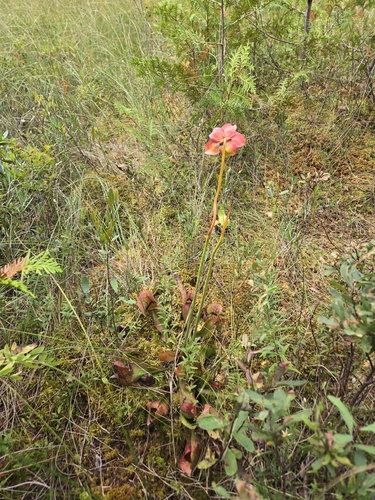
| Thumbnail | CPD Clone | Clone | Location | Sex | Distributor | Description |
|---|---|---|---|---|---|---|
| No image | CPD-0350 | ssp. venosa (ISC/SG) | - | Monoecious or Hermaphroditic | - | This subspecies is known from southern regions of purpureas distribution range like North & South Carolina. |
| No image | CPD-0349 | ssp. purpurea (ISC/SG) | - | Monoecious or Hermaphroditic | - | Most frost resistant subspecies/variant. |
| No image | CPD-0320 | ISC/SG | - | Monoecious or Hermaphroditic | - | - |
Taxonomy
Species/Hybrid description
Sarracenia purpurea has established non-native populations in several European countries as a result of deliberate human introductions.
Ireland around 1893
Switzerland since 1890
Germany, France, England, Scotland...
How to Tell Sarracenia purpurea ssp. purpurea and ssp. venosa Apart
Sarracenia purpurea has two commonly recognized subspecies that can be distinguished by several physical characteristics: ssp. purpurea and ssp. venosa.
Sarracenia purpurea ssp. purpurea has smooth, waxy, and hairless (glabrous) pitchers. The pitchers are generally firmer and harder in texture. They are often darker in overall color but usually show less pronounced veining compared to ssp. venosa.
In contrast, Sarracenia purpurea ssp. venosa has noticeably hairy (pubescent) pitchers. The pitchers feel softer and less rigid than those of ssp. purpurea. This subspecies is typically more strongly veined and often produces very dark red flowers.
Main Differences at a Glance
ssp. purpurea:
- Smooth, waxy, hairless pitchers
- Firmer, harder texture
- Often darker pitchers
- Less pronounced veining
ssp. venosa:
- Hairy (pubescent) pitchers
- Softer texture
- Strongly veined pitchers
- Very dark red flowers
For more distribution Info see: https://www.sarracenia.com/faq/faq5538.html
📜 View previous versions (21)
-
Edited by Tim on 18.04.2026
Sarracenia purpurea has established non-native populations in several European countries as a result of deliberate human introductions.
Ireland around 1893
Switzerland since 1890
Germany, France, England, Scotland...How to Tell Sarracenia purpurea ssp. purpurea and ssp. venosa Apart
Sarracenia purpurea has two commonly recognized subspecies that can be distinguished by several physical characteristics: ssp. purpurea and ssp. venosa.
Sarracenia purpurea ssp. purpurea has smooth, waxy, and hairless (glabrous) pitchers. The pitchers are generally firmer and harder in texture. They are often darker in overall color but usually show less pronounced veining compared to ssp. venosa.
In contrast, Sarracenia purpurea ssp. venosa has noticeably hairy (pubescent) pitchers. The pitchers feel softer and less rigid than those of ssp. purpurea. This subspecies is typically more strongly veined and often produces very dark red flowers.
Main Differences at a Glance
ssp. purpurea:
- Smooth, waxy, hairless pitchers
- Firmer, harder texture
- Often darker pitchers
- Less pronounced veining
ssp. venosa:
- Hairy (pubescent) pitchers
- Softer texture
- Strongly veined pitchers
- Very dark red flowers
For more distribution Info see: https://www.sarracenia.com/faq/faq5538.html
-
Edited by admin on 02.03.2026
Sarracenia purpurea has established non-native populations in several European countries as a result of deliberate human introductions.
Ireland around 1893
Switzerland since 1890
Germany, France, England, Scotland...How to Tell Sarracenia purpurea ssp. purpurea and ssp. venosa Apart
Sarracenia purpurea has two commonly recognized subspecies that can be distinguished by several physical characteristics: ssp. purpurea and ssp. venosa.
Sarracenia purpurea ssp. purpurea has smooth, waxy, and hairless (glabrous) pitchers. The pitchers are generally firmer and harder in texture. They are often darker in overall color but usually show less pronounced veining compared to ssp. venosa.
In contrast, Sarracenia purpurea ssp. venosa has noticeably hairy (pubescent) pitchers. The pitchers feel softer and less rigid than those of ssp. purpurea. This subspecies is typically more strongly veined and often produces very dark red flowers.
Main Differences at a Glance
ssp. purpurea:
- Smooth, waxy, hairless pitchers
- Firmer, harder texture
- Often darker pitchers
- Less pronounced veining
ssp. venosa:
- Hairy (pubescent) pitchers
- Softer texture
- Strongly veined pitchers
- Very dark red flowers
For more distribution Info see: https://www.sarracenia.com/faq/faq5538.html
-
Edited by admin
-
Edited by admin
-
Edited by admin
-
Edited by admin
-
Edited by admin on 01.03.2026
Sarracenia purpurea has established non-native populations in several European countries as a result of deliberate human introductions.
Ireland around 1893
Switzerland since 1890
Germany, France, England, Scotland...How to Tell Sarracenia purpurea ssp. purpurea and ssp. venosa Apart
Sarracenia purpurea has two commonly recognized subspecies that can be distinguished by several physical characteristics: ssp. purpurea and ssp. venosa.
Sarracenia purpurea ssp. purpurea has smooth, waxy, and hairless (glabrous) pitchers. The pitchers are generally firmer and harder in texture. They are often darker in overall color but usually show less pronounced veining compared to ssp. venosa.
In contrast, Sarracenia purpurea ssp. venosa has noticeably hairy (pubescent) pitchers. The pitchers feel softer and less rigid than those of ssp. purpurea. This subspecies is typically more strongly veined and often produces very dark red flowers.
Main Differences at a Glance
ssp. purpurea:
- Smooth, waxy, hairless pitchers
- Firmer, harder texture
- Often darker pitchers
- Less pronounced veining
ssp. venosa:
- Hairy (pubescent) pitchers
- Softer texture
- Strongly veined pitchers
- Very dark red flowers
For more distribution Info see: https://www.sarracenia.com/faq/faq5538.html
-
Edited by admin on 01.03.2026
Sarracenia purpurea has established non-native populations in several European countries as a result of deliberate human introductions.
Ireland around 1893
Switzerland since 1890
Germany, France, England, Scotland...How to Tell Sarracenia purpurea ssp. purpurea and ssp. venosa Apart
Sarracenia purpurea has two commonly recognized subspecies that can be distinguished by several physical characteristics: ssp. purpurea and ssp. venosa.
Sarracenia purpurea ssp. purpurea has smooth, waxy, and hairless (glabrous) pitchers. The pitchers are generally firmer and harder in texture. They are often darker in overall color but usually show less pronounced veining compared to ssp. venosa.
In contrast, Sarracenia purpurea ssp. venosa has noticeably hairy (pubescent) pitchers. The pitchers feel softer and less rigid than those of ssp. purpurea. This subspecies is typically more strongly veined and often produces very dark red flowers.
Main Differences at a Glance
ssp. purpurea:
- Smooth, waxy, hairless pitchers
- Firmer, harder texture
- Often darker pitchers
- Less pronounced veining
ssp. venosa:
- Hairy (pubescent) pitchers
- Softer texture
- Strongly veined pitchers
- Very dark red flowers
Sarracenia.com says the following about its distribution (https://www.sarracenia.com/faq/faq5538.html):
Range (S. purpurea subsp. purpurea)
USA states: Delaware, Maryland, D.C., New Jersey, Pennsylvania, New York, Connecticut, Rhode Island, Massachusetts, Vermont, New Hampshire, Maine, Ohio, Indiana, Michigan (upper and lower), Illinois, Wisconsin, and Minnesota. (Reports for Iowa are probably anecdotal.)Canada: Alberta, British Columbia, Labrador, Manitoba, New Brunswick, Newfoundland, Northwest Territories, Nova Scotia, Ontario, Prince Edward Island, Saskatchewan, and Quebec; in other words, every province except Yukon and Nunavut (data from NatureServe.org, BONAP.org).
France: Saint-Pierre-et-Miquelon (Saint Pierre Island, Miquelon Island).
While this is a huge distribution, within this area it occurs only in isolated patches, so it is a plant of some rarity.Range (S. purpurea subsp. venosa)
USA states: New Jersey, Maryland, Delaware, Virginia (500 plants remaining as of 2007, mostly at one site (Sheridan, pers. comm. 2007)), North Carolina, South Carolina, and Georgia (Rabun County, 1 site; Tattnall County, 1 site still extant as of 2007---Sheridan (pers. comm. 2007)). Populations in West Virginia are non-native, and were introduced from a now-extirpated population from Highpoint, Maryland (Sheridan, pers. comm. 2007). Similarly, populations in Washington state and California are also introduced. -
Edited by admin on 28.02.2026
Sarracenia purpurea has established non-native populations in several European countries as a result of deliberate human introductions.
Ireland around 1893
Switzerland since 1890
Germany, France, England, Scotland...How to Tell Sarracenia purpurea ssp. purpurea and ssp. venosa Apart
Sarracenia purpurea has two commonly recognized subspecies that can be distinguished by several physical characteristics: ssp. purpurea and ssp. venosa.
Sarracenia purpurea ssp. purpurea has smooth, waxy, and hairless (glabrous) pitchers. The pitchers are generally firmer and harder in texture. They are often darker in overall color but usually show less pronounced veining compared to ssp. venosa.
In contrast, Sarracenia purpurea ssp. venosa has noticeably hairy (pubescent) pitchers. The pitchers feel softer and less rigid than those of ssp. purpurea. This subspecies is typically more strongly veined and often produces very dark red flowers.
Main Differences at a Glance
ssp. purpurea:
Smooth, waxy, hairless pitchers
Firmer, harder texture
Often darker pitchers
Less pronounced veiningssp. venosa:
Hairy (pubescent) pitchers
Softer texture
Strongly veined pitchers
Very dark red flowersSarracenia.com says the following about its distribution (https://www.sarracenia.com/faq/faq5538.html):
Range (S. purpurea subsp. purpurea)
USA states: Delaware, Maryland, D.C., New Jersey, Pennsylvania, New York, Connecticut, Rhode Island, Massachusetts, Vermont, New Hampshire, Maine, Ohio, Indiana, Michigan (upper and lower), Illinois, Wisconsin, and Minnesota. (Reports for Iowa are probably anecdotal.)Canada: Alberta, British Columbia, Labrador, Manitoba, New Brunswick, Newfoundland, Northwest Territories, Nova Scotia, Ontario, Prince Edward Island, Saskatchewan, and Quebec; in other words, every province except Yukon and Nunavut (data from NatureServe.org, BONAP.org).
France: Saint-Pierre-et-Miquelon (Saint Pierre Island, Miquelon Island).
While this is a huge distribution, within this area it occurs only in isolated patches, so it is a plant of some rarity.Range (S. purpurea subsp. venosa)
USA states: New Jersey, Maryland, Delaware, Virginia (500 plants remaining as of 2007, mostly at one site (Sheridan, pers. comm. 2007)), North Carolina, South Carolina, and Georgia (Rabun County, 1 site; Tattnall County, 1 site still extant as of 2007---Sheridan (pers. comm. 2007)). Populations in West Virginia are non-native, and were introduced from a now-extirpated population from Highpoint, Maryland (Sheridan, pers. comm. 2007). Similarly, populations in Washington state and California are also introduced. -
Edited by Tim on 28.02.2026
Sarracenia purpurea has established non-native populations in several European countries as a result of deliberate human introductions.
Ireland around 1893
Switzerland since 1890
Germany, France, England, Scotland...Sarracenia.com says the following about its distribution (https://www.sarracenia.com/faq/faq5538.html):
Range (S. purpurea subsp. purpurea)
USA states: Delaware, Maryland, D.C., New Jersey, Pennsylvania, New York, Connecticut, Rhode Island, Massachusetts, Vermont, New Hampshire, Maine, Ohio, Indiana, Michigan (upper and lower), Illinois, Wisconsin, and Minnesota. (Reports for Iowa are probably anecdotal.)Canada: Alberta, British Columbia, Labrador, Manitoba, New Brunswick, Newfoundland, Northwest Territories, Nova Scotia, Ontario, Prince Edward Island, Saskatchewan, and Quebec; in other words, every province except Yukon and Nunavut (data from NatureServe.org, BONAP.org).
France: Saint-Pierre-et-Miquelon (Saint Pierre Island, Miquelon Island).
While this is a huge distribution, within this area it occurs only in isolated patches, so it is a plant of some rarity.Range (S. purpurea subsp. venosa)
USA states: New Jersey, Maryland, Delaware, Virginia (500 plants remaining as of 2007, mostly at one site (Sheridan, pers. comm. 2007)), North Carolina, South Carolina, and Georgia (Rabun County, 1 site; Tattnall County, 1 site still extant as of 2007---Sheridan (pers. comm. 2007)). Populations in West Virginia are non-native, and were introduced from a now-extirpated population from Highpoint, Maryland (Sheridan, pers. comm. 2007). Similarly, populations in Washington state and California are also introduced. -
Edited by Tim on 28.02.2026
Sarracenia purpurea has established non-native populations in several European countries as a result of deliberate human introductions.
Ireland around 1893
Switzerland since 1890
Germany, France, England, Scotland... -
Edited by Tim on 28.02.2026
Sarracenia purpurea has established non-native populations in several European countries as a result of deliberate human introductions. (Germany, Switzerland, France...)
Distribution & Observations
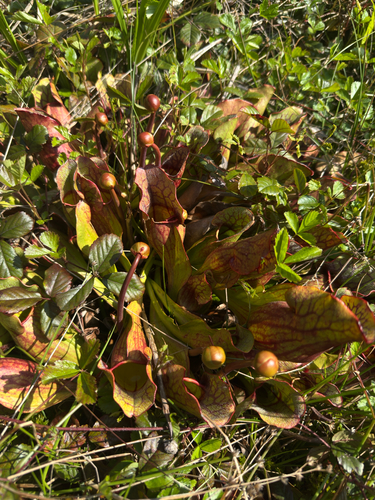
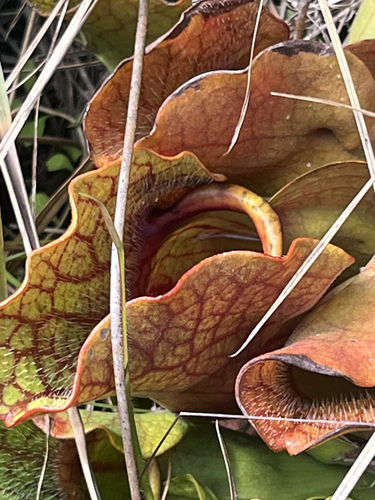
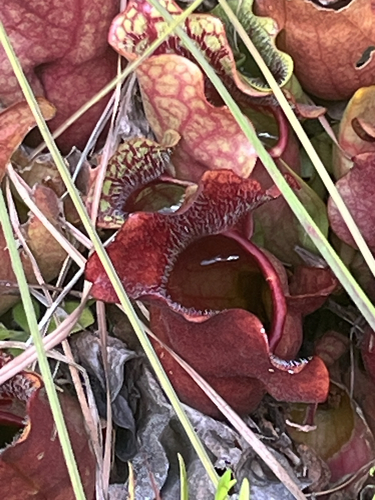
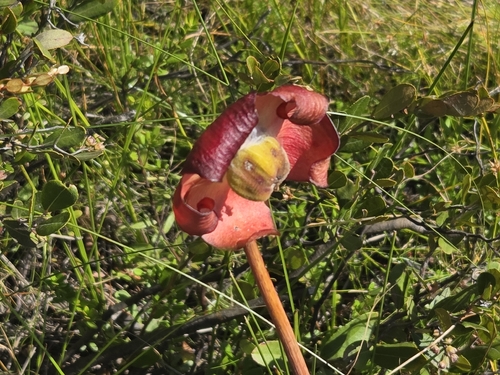
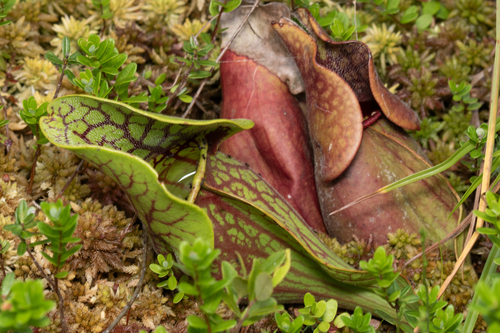
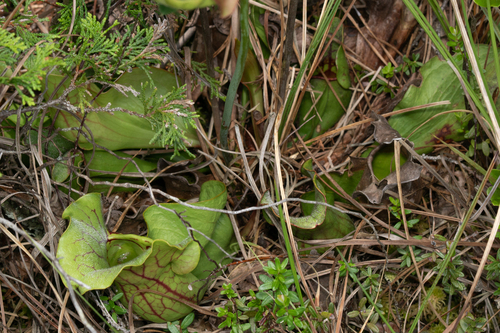
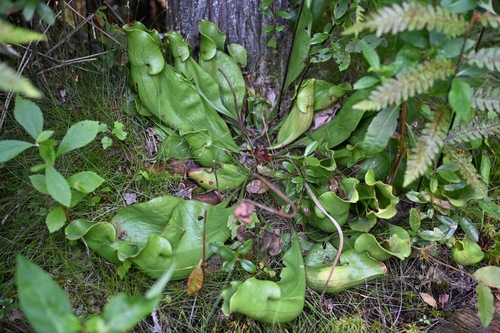
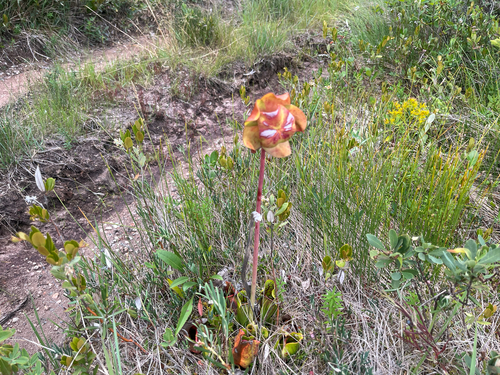
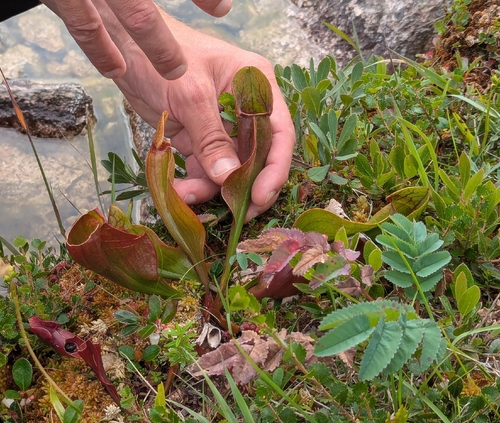
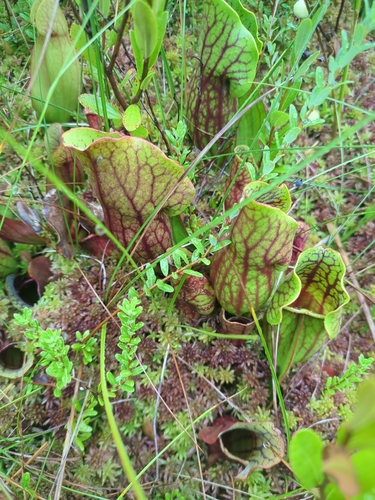
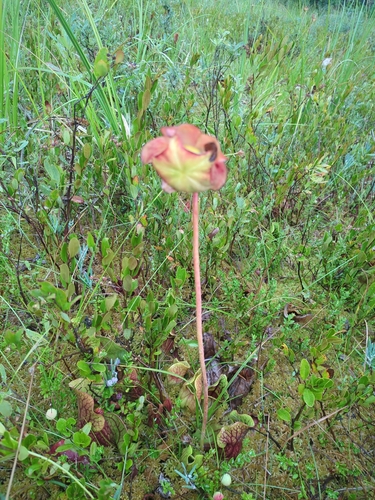
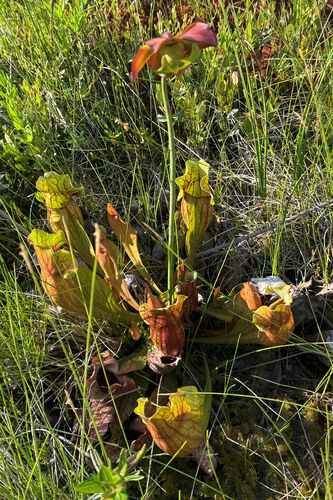
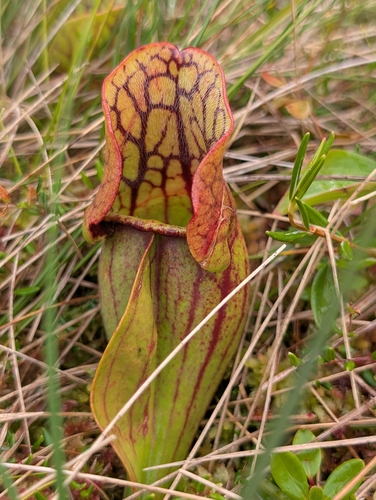
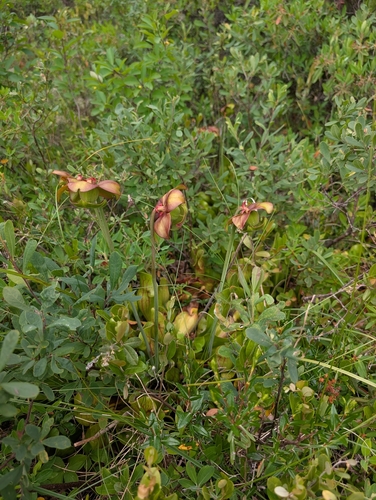
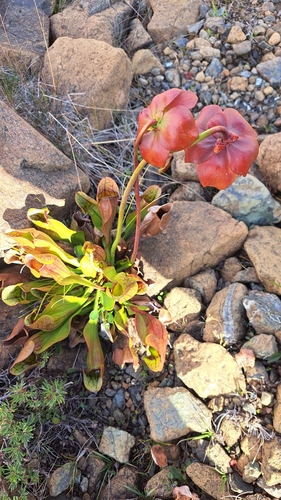
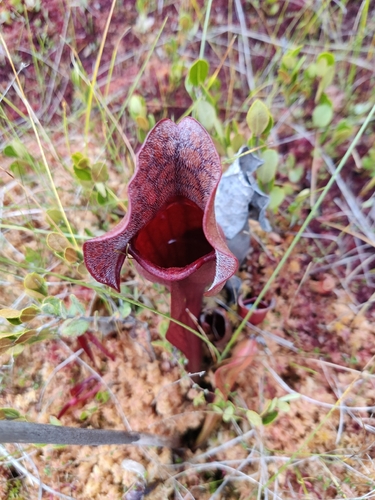
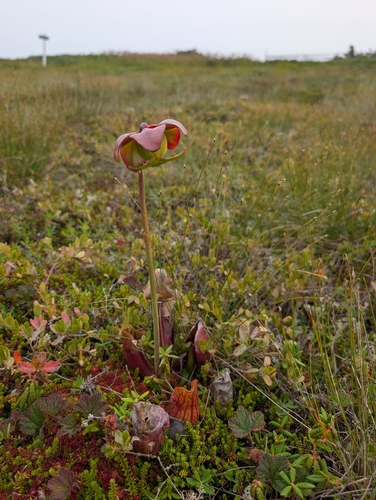
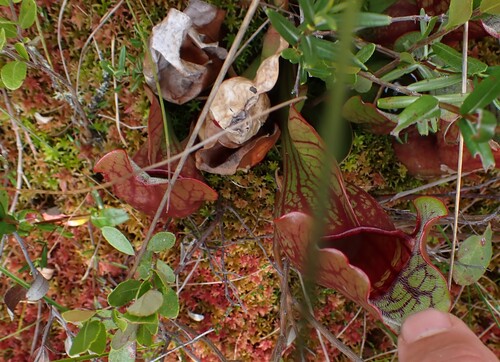
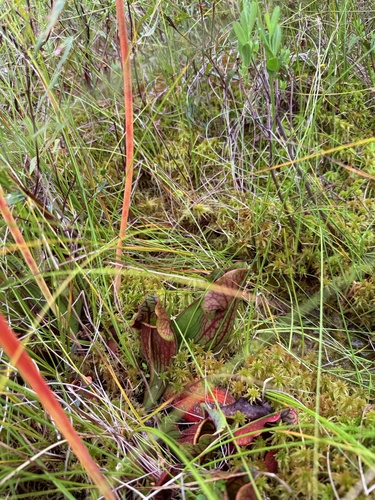
Photos by iNaturalist observers, used under the licence each of them chose. Click a photo for the observation it belongs to.
Climate at native sites
Asks your browser for your approximate position, rounded to about a kilometre before it is used. It is not stored anywhere, not even in this browser, and is gone when you leave the page.
Where do I get coordinates?
In Google Maps, right-click a spot and click the coordinates at the top of the menu to copy them, then paste them here. The ground height at those coordinates is looked up automatically; fill in the elevation only to override it, for instance if you grow on a roof or in a valley the terrain data smooths over.